
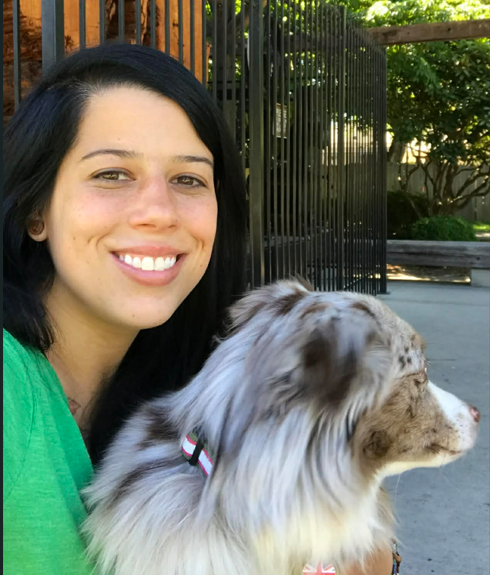
Location: Oregon
Years in the breed: 20
MASCUSA member? I was, but am
not currently
Program Type: Service/ESA Breeder
1. Can you tell us a bit about yourself and your background in breeding Miniature American Shepherds?
I have been training, breeding, and showing dogs for over 20 years. I began with Australian Shepherds and have been involved with Miniature American Shepherds since 2006. I live in Oregon with my husband, Tony, my service dog, Cherry, and six generations of Rebel Soul dogs. I am deeply invested in pedigrees and have a particular appreciation for bi-color dogs. I believe in raising puppies with intention and integrity, and that temperament is everything.
2. What drew you to the Miniature American Shepherd breed, and what do you love most about them?
My first service dog was a Mini, and she saved my life. I was drawn to their unwavering loyalty and the depth of the bond they form with their owners. They are also incredibly versatile and highly intelligent.
3. How do you approach the breeding process to ensure the health and well-being of your dogs?
Research, research, research. It’s not only about the individual pairing or ensuring pedigrees are compatible — it’s about envisioning my program multiple generations down the road. I strive to collect as much data as possible on both individual dogs and their pedigrees. I spend countless hours studying multiple generations within my own lines, as well as the pedigrees I plan to incorporate. My in-depth knowledge of Miniature American Shepherd and Australian Shepherd pedigrees is central to my research and long-term breeding decisions.
4. What are the most important qualities you look for in a Miniature American Shepherd when considering breeding?
Temperament is paramount. If I can’t live with it, I don’t care how many BIS titles it has — it’s not worth it to me. Happy customers and well-adjusted dogs will always matter more than a ribbon.
5. What challenges have you faced as a breeder, and how have you overcome them?
I think the biggest challenge is having the courage to follow your own path, even when others
disagree. Many people told me not to use one of my foundation bitches, yet I wouldn’t be where I
am today without her. I believe we must trust our instincts and remain true to ourselves.
6. Can you describe your kennel’s environment and how you ensure that your dogs are well-socialized?
My dogs live in my home, and my puppies are raised in my living room—not in a kennel. We live on a farm, so they grow up surrounded by animals and everyday activity. My husband is a musician, ensuring our dogs are exposed to a wide range of sounds from an early age. We also welcome many visitors, giving the puppies gentle, hands-on interaction from day one.
7. How do you select prospective owners for your puppies? What qualities do you look for?
I use a detailed puppy application and a phone interview to ensure I’m working with the right people. Each litter is also evaluated by an animal behaviorist, allowing us to thoughtfully match each puppy with the family best suited for them.
8. What advice would you give to someone interested in becoming a breeder of Miniature American Shepherds?
Learn as much as possible about pedigree. Do not follow trends when it comes to breeding; our breed has lost a great deal of diversity because people followed a cross that worked for other people. Be bold, and create your own recipe.
9. Can you tell us about any notable successes or achievements you’ve had with your dogs (titles, recognition, etc.)?
I could talk about the champions and sport dogs I’ve
produced, or about dogs of mine that have been top Miniature American Shepherds in other
countries. However, my greatest achievement is the temperament and consistency of my dogs.
Working with people who are seeking service dogs to support their disabilities is one of the things
I am most proud of. A service dog can have an enormous impact on a person’s life, and to me,
that has no price.
10. How do you stay updated on new developments in the breed and the dog world in general?
I stay in close contact with knowledgeable, wonderful people. It takes a
village to sustain a breed, and I surround myself with individuals who are not only very smart, but
also very kind—people who share a mutual goal and who want to work together to improve the
breed.
11. What are your thoughts on the future of the Miniature American Shepherd breed and how do you see it evolving?
I have been in the breed since before we were accepted into the AKC Foundation Stock Service. I believe we cannot forget our roots, but we must also make space for new breeders to be heard. Working together to move forward is the only way to keep our breed strong.
12. Is there anything else you’d like to share about your journey as a breeder or any special stories about your dogs?
You can always learn something new—even from a breeder who is just starting out. I believe it’s incredibly important to listen to others. We have two ears, two eyes, two nostrils, and one mouth for a reason: we should watch, listen, and observe twice as much as we speak.